
INHCC Leadersip

Lydie Trautmann, EngD, PhD
Henry Jackson Foundation in support of MHRP
Dr. Trautmann is Director of Translational Research, Global Infectious Diseases Portfolio, at the Henry M Jackson Foundation for the Advancement of Military Medicine in support of MHRP, EIDB, and DCB. She oversees the research efforts in the current and upcoming MHRP clinical trials in Thailand. Dr. Trautmann received her M.Sc. and Engineer Doctor degree in 1998, and her Ph.D. in Immunology at Paris V University in 2003. Prior to her role at HJF, she performed research for two decades in translational human immunology evaluating early treatment, HIV-associated neurocognition and immune interventions aimed at achieving HIV remission at the Vaccine and Gene Therapy Institute in Florida and at the Oregon Health and Science University as well as at MHRP. She has established a strong research agenda with high ranked publications, a large collaborative network and a vigorous funding portfolio. She also serves on several national and international review committees and co-leads the International NeuroHIV Cure Consortium.

Serena Spudich, MD, MA
Yale School of Medicine
Dr. Spudich is the Gilbert H. Glaser Professor of Neurology, Division Chief of Neurological Infections & Global Neurology, and Co-Director of the Center for Brain & Mind Health at Yale School of Medicine. She graduated from medical school at the University of California, San Francisco in 1997, then pursued residency training at the University of Washington in Internal Medicine and at the Massachusetts General Hospital/Brigham and Women’s Hospital combined program in Neurology. She returned to UCSF in 2003 as a fellow in NeuroHIV with Dr. Richard Price, remaining at UCSF until moving to Yale University in 2010. Dr. Spudich is a neurologist whose clinical and translational research is focused on the pathogenesis of HIV in the nervous system, in particular the impact of acute HIV infection and early treatment on the central nervous system and the establishment of persistent CNS reservoirs for HIV. She has collaborated with INHCC investigators in SEARCH-based studies since 2010. In addition to her research, Dr. Spudich cares for people living with HIV with neurological disorders at the Nathan Smith HIV Clinic at Yale.

Robert Paul, PhD, ABPP-CN
University of Missouri - St. Louis
Dr. Paul is Curators' Distinguished Professor of Psychological Sciences at the University of Missouri - St Loui and serves as Executive Director of the Missouri Institute of Mental Health. He earned his PhD in Biological Psychology from the University of Oklahoma Health Science Center and completed his internship and postdoctoral fellowship in Neuropsychology at Brown Medical School. Dr. Paul’s research team has developed specific expertise in HIV, subcortical stroke, and early life trauma, three conditions that impact the integrity of deep brain structures including: white matter, basal ganglia, and limbic structures. Investigations include leveraging innovative neuroinformatic models and artificial intelligence (AI) to discover latent, clinically relevant structure and meaning within large and complex data matrices. Dr. Paul has a special interest in the application of these methods in resource-limited environments and has active research programs across Southeast Asia and subsaharan Africa.
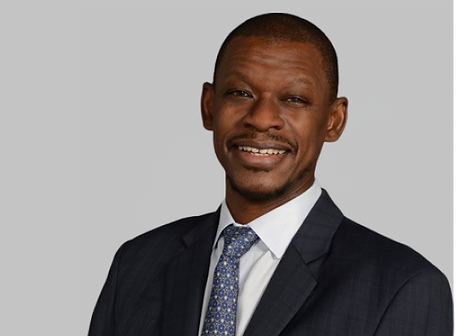
Lishomwa (Lish) Ndhlovu, MD, PhD
Weill Cornell Medicine
Dr. Ndhlovu is the Herbert J. and Ann L. Siegel Distinguished Professor of Medicine, Professor of Immunology in Neuroscience, and Professor of Immunology in Medicine at Weill Cornell Medicine. After completing medical training, his scientific career began at Tohoku University in Japan where he received his PhD in Immunology and pursued post-doctoral training at the University of California, San Francisco. Dr. Ndhlovu's research focuses on understanding the pathogenic mechanisms underlying complications impacting brain health and co-infections in HIV particularly among those receiving virally suppressive antiretroviral therapy across a spectrum of ages. Using multiple immunological, virological and molecular epigenetic and genetic modalities, he aims to exploit this knowledge in developing novel approaches and effective therapeutics to improving quality of life outcomes. He is actively engaged in pre-clinical and clinical studies nationally and internationally to achieve these goals.

Victor Valcour, MD, PhD
University of California, San Francisco
Dr. Valcour, a Founding Director of INHCC, alongside D.r Ananworanich, is the inaugural Executive Director of the Global Brain Health Institute (GBHI) and a geriatrician at the Memory and Aging Center at UCSF, where he cares for older patients with cognitive disorders and directs international studies on dementia. His research focuses on the impact of HIV on brain function and international capacity development. In Africa, he has partnered with the MHRP to survey cognitive disorders among HIV-infected individuals in Nigeria, Uganda, Kenya, and Tanzania. Dr. Valcour is actively engaged in mentoring individuals wishing to become independent clinical researchers. His research portfolio provides a broad array of local and international projects that can serve as resources for mentored projects.